
Ventura County Eviction Process: Guide for Landlords
Understanding the Ventura County Unlawful Detainer Process Step by Step
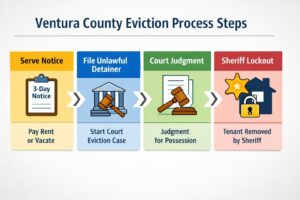
Owning rental property in Ventura County, California sometimes requires landlords to address serious lease violations such as nonpayment of rent or breach of rental agreements. When these situations occur, landlords must follow the legal eviction process established under California law. If you are considering renting your home, learn more about our Ventura County property management services. Evictions in California follow a strict legal procedure known as an unlawful detainer process. Because these steps must be followed carefully, understanding the proper notice requirements and court procedures is essential for Ventura County property owners.
Step 1: Serving the Proper Legal Notice
Before filing an eviction case, landlords must provide the tenant with the appropriate written notice. Common notices used in Ventura County include:
• 3-Day Notice to Pay Rent or Quit – used when rent has not been paid
• 3-Day Notice to Cure or Quit – used when a tenant violates the lease
• 30-Day Notice to Vacate – often used for month-to-month tenancies
• 60-Day Notice to Vacate – required for longer tenancies in certain situations
These notices must be served correctly according to California law before an eviction case can begin.
Step 2: Filing an Unlawful Detainer Lawsuit
If the tenant does not comply with the notice, the landlord may file an unlawful detainer action with the court. In Ventura County, eviction cases are typically handled through the Ventura County Superior Court system. Once the case is filed:
• the tenant is formally served with court papers
• the tenant has a limited number of days to respond
• the case may proceed to a hearing or trial if contested
Because eviction timelines are governed by strict rules, many landlords seek legal guidance during this stage.
Step 3: Court Judgment
If the court rules in favor of the landlord, a judgment for possession of the property is issued. This allows the landlord to request a writ of possession, which authorizes the sheriff to remove the tenant if they do not voluntarily leave the property. The timeline for reaching this stage can vary depending on whether the case is contested and the court’s schedule.
Step 4: Sheriff Lockout
After the court issues a writ of possession, the Ventura County Sheriff’s Office may post a notice at the property giving the tenant a limited time to vacate. If the tenant does not leave by the deadline, the sheriff may conduct a physical lockout, returning possession of the property to the landlord.
Tenant Protection Laws and Local Regulations
California has enacted several tenant protection laws that can affect eviction procedures. For example, statewide tenant protection rules and local ordinances in some cities may require additional documentation, notice requirements, or relocation assistance in certain circumstances. In the City of Oxnard, local tenant protection rules may apply in situations involving rent stabilization and relocation assistance for certain no-fault evictions. Because local housing regulations can change, landlords should stay informed about the rules that apply to their property.
Common Reasons for Eviction
Landlords may initiate the eviction process for several reasons, including:
• failure to pay rent
• lease violations
• property damage
• illegal activity
• refusal to vacate after lease termination
However, every eviction must follow California’s formal legal process before a tenant can be removed.
Avoiding Evictions Through Proper Tenant Screening
Many eviction situations can be reduced through careful tenant screening and proper lease documentation. Experienced property managers often focus on:
• credit screening
• income verification
• rental history checks
• clear lease agreements
Proper tenant screening helps landlords select reliable tenants and reduce the likelihood of disputes.
Why Ventura County Landlords Work With Property Managers
Evictions can be time-consuming and legally complex. Many Ventura County property owners choose professional management to help reduce risk and ensure proper procedures are followed. Property management companies help landlords by:
• screening tenants carefully
• documenting lease agreements
• handling notices properly
• coordinating legal procedures when necessary
This can help landlords navigate challenging situations while protecting their rental investment.
Learn More About Renting Property in Ventura County
If you’re preparing to rent your property or want to better understand the rental market, these guides may also help:
• Rent My House Ventura County
• How Much Rent Can I Charge in Ventura County
• Ventura County Property Management Cost
• Ventura County Landlord Laws
These resources provide helpful information for Ventura County landlords managing rental housing. For more rental property tips, visit our Ventura County Landlord Resources guide.
Ventura County Eviction Process – Frequently Asked Questions
The eviction process in Ventura County can take approximately 30 to 45 days in some cases, but it can also take several months if the tenant contests the eviction. The timeline depends on the type of notice, court scheduling, and whether the tenant responds to the unlawful detainer lawsuit.
The first step is serving the tenant with a written notice, such as a 3-Day Notice to Pay Rent or Quit or a notice to perform covenant or quit. If the tenant does not comply with the notice, the landlord can then file an unlawful detainer lawsuit with the court.
No. In California, the only legal way to evict a tenant is through the court process and a sheriff lockout. Landlords cannot change locks, shut off utilities, or remove a tenant’s belongings without a court order.
If the landlord wins the unlawful detainer case, the court issues a Writ of Possession. The Ventura County Sheriff will then post a 5-day notice to vacate, and if the tenant does not leave, the sheriff will perform a lockout and return possession of the property to the landlord.
Common reasons include non-payment of rent, lease violations, unauthorized occupants, property damage, or the expiration of a lease agreement.
Eviction costs can include court filing fees, process server fees, attorney fees, and lost rent during the eviction process. Many landlords compare these costs when deciding whether to proceed with an eviction or consider other options. You can learn more about overall costs here:
Ventura County Property Management Fees
Yes, many Ventura County property managers coordinate the eviction process with eviction attorneys, handle notices, documentation, and court filings. Learn more about the rental process here:
Rent My House Ventura County
The best way to avoid evictions is through proper tenant screening, clear lease agreements, and proactive property management. Learn more about:
Ventura County Tenant Screening
Ventura County Rental Property Maintenance
Need Help With the Ventura County Eviction Process?
If you’re dealing with a difficult tenant situation, understanding the legal eviction process is important to protect yourself and your property.
Learn more about the rental process and property management services here:
Rent My House Ventura County
Ventura County Eviction Process Overview
The Ventura County eviction process, also called an unlawful detainer, is the legal process a landlord must follow to remove a tenant from a rental property. Under California law, a landlord cannot simply ask a tenant to leave or change the locks. The only legal way to evict a tenant is by serving proper legal notice and obtaining a court order for possession.
The eviction process typically begins with a written notice, such as a 3-Day Notice to Pay Rent or Quit, a 3-Day Notice to Perform Covenant or Quit, or a 30- or 60-Day Notice to Terminate Tenancy depending on the reason for the eviction.
If the tenant does not comply with the notice, the landlord can file an unlawful detainer lawsuit with the court. The tenant then has a limited number of days to respond to the lawsuit, and if the court rules in favor of the landlord, the sheriff will post a notice to vacate and may perform a lockout if the tenant does not move.
The full eviction process in California can take anywhere from several weeks to several months depending on whether the tenant contests the case and how quickly the court process moves.
Preventing Evictions Through Proper Tenant Screening
Many eviction situations can be reduced by careful tenant screening and clear lease agreements. Reviewing credit history, income, rental history, and background information before placing a tenant can help reduce the likelihood of late payments, lease violations, and eviction situations.
Property owners often review the Ventura County Tenant Screening Guide
and the Ventura County Rental Market before renting out a property to help reduce risk.
Financial Impact of an Eviction
An eviction can be expensive for rental property owners because of lost rent, court costs, legal fees, and property repairs after a tenant moves out. Because of these costs, many landlords analyze rental income, expenses, and risks before renting out a property.
Helpful planning resources include reviewing a Ventura County Rent Estimate
understanding Ventura County Property Management Fees and reading the Ventura County Landlord Resources page to understand the full rental process.
About Esquire Property Management
Esquire Property Management works with Ventura County rental property owners to help manage difficult tenant situations, coordinate legal notices, and guide property owners through the eviction process when necessary. Because California eviction laws require strict legal procedures and documentation, many landlords choose to work with a property management company to help ensure notices, documentation, and timelines are handled correctly.
In addition to eviction coordination, Esquire Property Management helps landlords with tenant screening, rent collection, maintenance coordination, and lease enforcement to help reduce the likelihood of eviction situations in the first place.
If you are planning to rent your property or need help managing a current rental, you can learn more about Ventura County Property Management